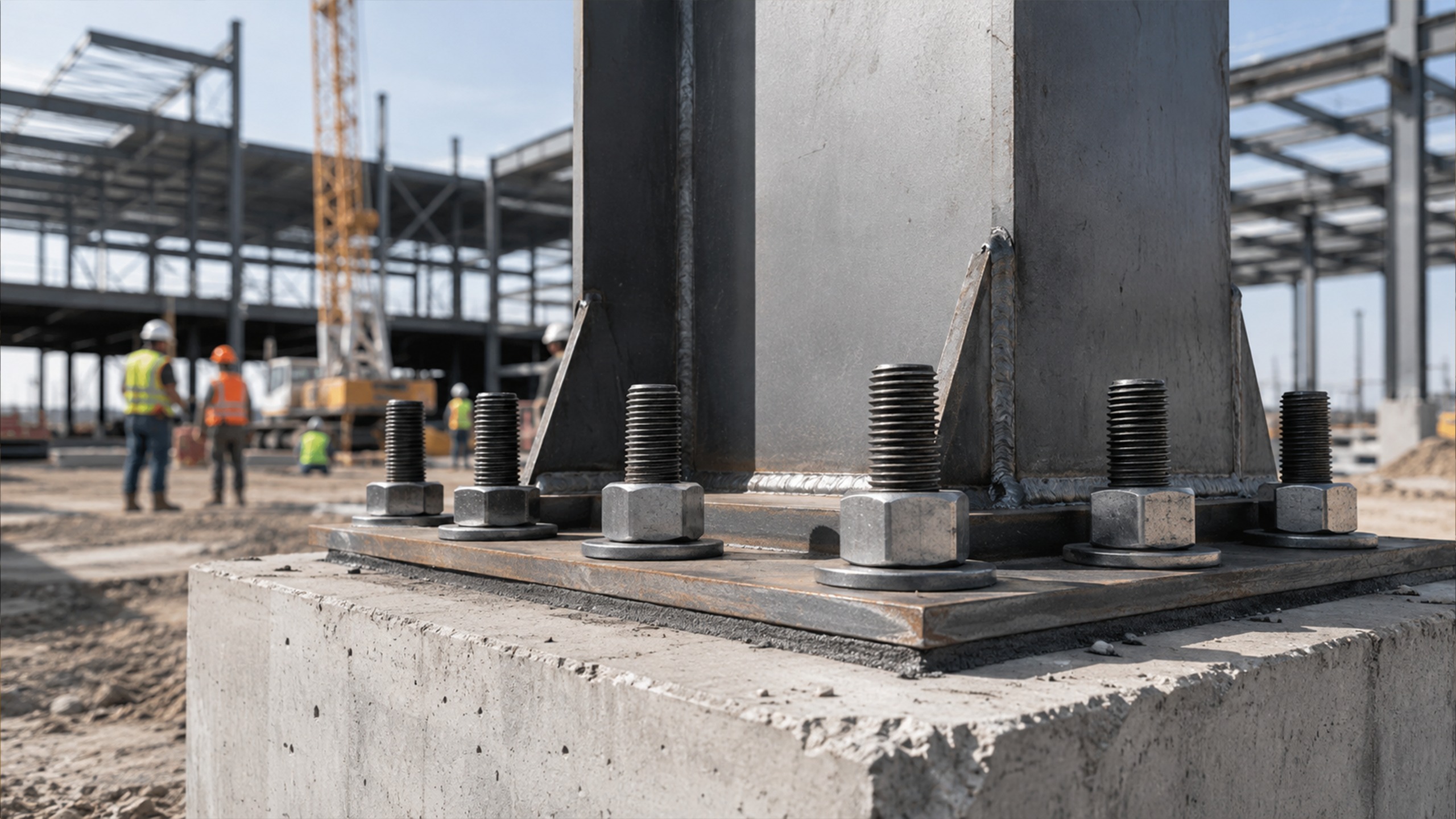
Washers are small but essential components in construction and engineering projects. They play an important role in creating secure fastening connections, protecting material surfaces and distributing pressure across bolted joints. Although they may appear simple, selecting the right washer can make a difference in the performance and durability of a construction assembly.
From structural steel installations to roofing, machinery assembly and general building work, different washer designs serve specific purposes. Understanding their functions helps contractors, engineers and procurement teams select suitable fastening components for their project requirements.
A washer is a thin, flat or specially shaped component with a central hole. It is generally placed between a nut or bolt head and the surface being fastened. Its primary purpose is to distribute the applied load over a wider area, reduce surface damage and support a stable connection.
In construction projects, washers are used alongside bolts, nuts and other fastening components to improve the performance of connections. Depending on their design, they can also help accommodate uneven surfaces, maintain fastening tension, provide sealing and protect materials from direct contact with metal fasteners.
Choosing an appropriate washer is particularly important in applications involving structural steel, timber connections, metal roofing and heavy equipment installations.
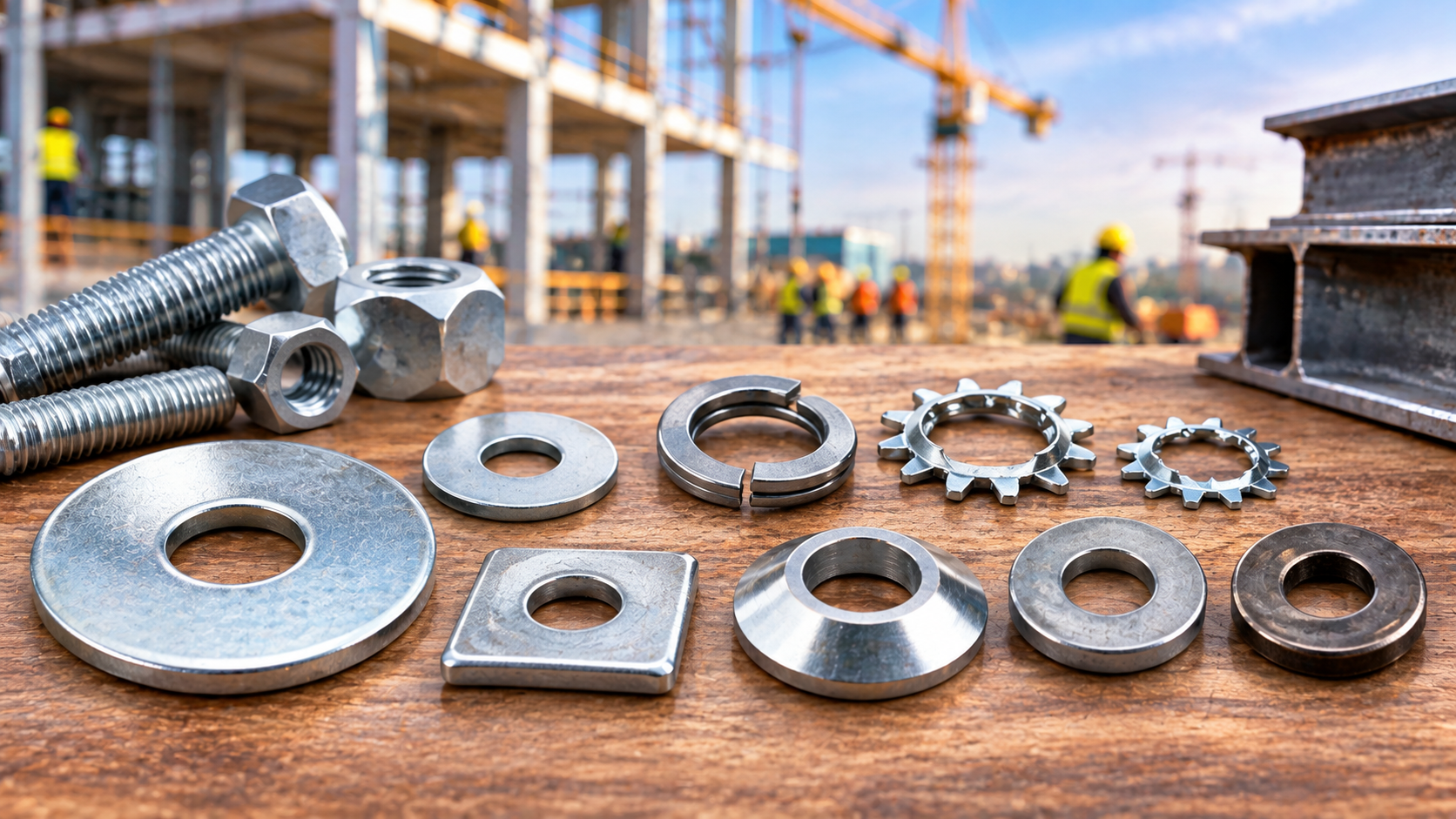
Not all washers serve the same purpose. Their shapes, materials and designs determine where they are most suitable. Here are some commonly used types of washers and their applications in construction.
Flat washers are among the most commonly used washers in construction and general engineering applications. They feature a simple circular design with a central hole and a smooth, flat surface.
Their primary function is to distribute the pressure created when tightening a nut or bolt. This helps reduce concentrated pressure on the connected material and protects the surface from damage during installation.
Flat washers are commonly used in structural assemblies, equipment installations, metal fabrication and general building applications. They are available in different dimensions and materials to suit various fastening requirements.
Spring washers are designed with an elastic structure that provides spring action when compressed. They are commonly used in fastening assemblies where maintaining contact pressure is important.
These washers are available in different designs, including split and conical forms. Their spring characteristics can help accommodate minor changes in joint conditions and maintain tension within suitable applications.
In construction and engineering environments, spring washers are used in machinery assemblies, equipment installations and selected mechanical connections. The appropriate design should be chosen according to the joint requirements, as not every spring washer provides reliable resistance to vibration-induced loosening.
Lock washers are designed to help resist unwanted movement or rotation within fastening assemblies. Depending on their design, they use teeth, friction, or mechanical locking features to support the connection.
Common varieties include split lock washers, internal tooth lock washers and external tooth lock washers.
They are used in machinery installations, electrical equipment assemblies, metal structures and other applications where additional fastening security is required. The selection should consider the expected vibration, applied loads and manufacturer's installation recommendations.
Fender washers are similar to flat washers but have a considerably larger outer diameter. This wider surface area allows them to distribute fastening pressure over a larger section of the connected material.
They are particularly useful when working with thin sheets, lightweight panels and materials that require additional surface support around a fastening point.
In construction, fender washers are commonly used in sheet metal installations, panel fixing and certain roofing and fabrication applications. They can also provide support around slightly oversized holes when the project specification permits their use.
Square washers have a square-shaped outer profile and a central hole. Their design provides a wider bearing surface, making them useful in applications involving timber, structural components and certain metal assemblies.
They help distribute pressure across the connected surface and can provide better support when fastening materials that require a larger contact area.
Square washers are frequently used in timber construction, wooden framework installations and structural connections where their dimensions and material specifications are suitable for the application.
Bevel washers, also known as tapered washers, feature an angled surface that helps accommodate differences between the fastening surface and the bolt head or nut.
They are particularly useful when connecting components with sloping or non-parallel surfaces. Their design helps provide a more appropriate bearing surface for the fastening assembly.
In construction, bevel washers are commonly used with structural steel sections, including certain beam and channel connections. They help support proper alignment when the connection surface is inclined.
Hardened washers are manufactured from heat-treated materials to provide increased hardness and resistance to deformation under specified loads.
They are commonly used in heavy-duty fastening applications where standard washers may not provide the required bearing performance.
In construction, hardened washers are important in selected structural steel connections, heavy equipment installations and high-strength bolted assemblies. Their hardness, dimensions and grade should match the requirements of the fastening system and relevant engineering specifications.
Bonded washers combine a metal outer component with a rubber or elastomeric sealing layer. This design helps create a seal around the fastening point and reduce the possibility of water entering through the connection.
They are widely used in roofing, cladding and metal sheet installations where weather protection is important.
The sealing material and washer dimensions should be suitable for the roofing material, screw design and expected environmental conditions. Correct installation also helps maintain the effectiveness of the seal.
Selecting the right washer involves more than choosing a suitable shape. It requires considering the fastening conditions, connected materials and overall project specifications.
Here are some important factors to consider:
Material Compatibility: Choose washer materials that are suitable for the connected components and surrounding environment. Stainless steel and galvanised steel are common options for applications requiring corrosion resistance.
Size and Dimensions: The inner diameter should match the fastener requirements, while the outer diameter and thickness should provide suitable bearing support.
Load Requirements: Consider the expected fastening load and the bearing strength of the connected material. Structural applications may require specifically rated washers.
Environmental Conditions: Outdoor construction, coastal locations and exposed installations may require additional corrosion protection.
Application Requirements: Consider whether the connection needs load distribution, surface protection, sealing, alignment, or a specific locking mechanism.
Relevant Standards: Always check the applicable project specifications, engineering requirements and recognised fastener standards before selecting washers for critical connections.
Working with an experienced building materials supplier can also help procurement teams identify suitable products and maintain consistency across construction projects.
The performance of a fastening assembly depends on the quality and compatibility of its individual components. Even a small component such as a washer can influence how effectively a connection performs under its intended conditions.
Using appropriately specified washers helps distribute loads, protect connected surfaces and support reliable fastening arrangements. It also helps construction teams maintain consistency during installation and reduce the possibility of issues caused by unsuitable components.
For contractors, engineers and procurement professionals, sourcing washers from a dependable supplier is an important part of maintaining material quality throughout a project. Selecting the right products based on technical specifications and application requirements supports efficient construction work and long-term structural performance.
Finding suitable fastening components is an important step in maintaining quality across construction and industrial projects. Whether your requirements involve flat washers, spring washers, lock washers, or specialised fastening components, selecting products that meet the required specifications is essential.
At Ellora Group we understand the importance of dependable building materials and fastening solutions for construction and industrial applications. As a building materials supplier in Qatar, we aim to support project requirements with suitable material sourcing and professional assistance.
Contact Ellora Group to discuss your project requirements and explore suitable building materials and fastening components for your next construction project. Our team can help you identify the right products based on your application and specifications.
Contact Ellora Group
Mobile: +974 5523 0745
Landline: +974 4486 3436
Email: sales@elloragroupwll.com